Resident Steward Pilot: Santa Fe (2025-2026)
Funded by the City of Santa Fe, in collaboration with multiple shelter and supported housing providers.
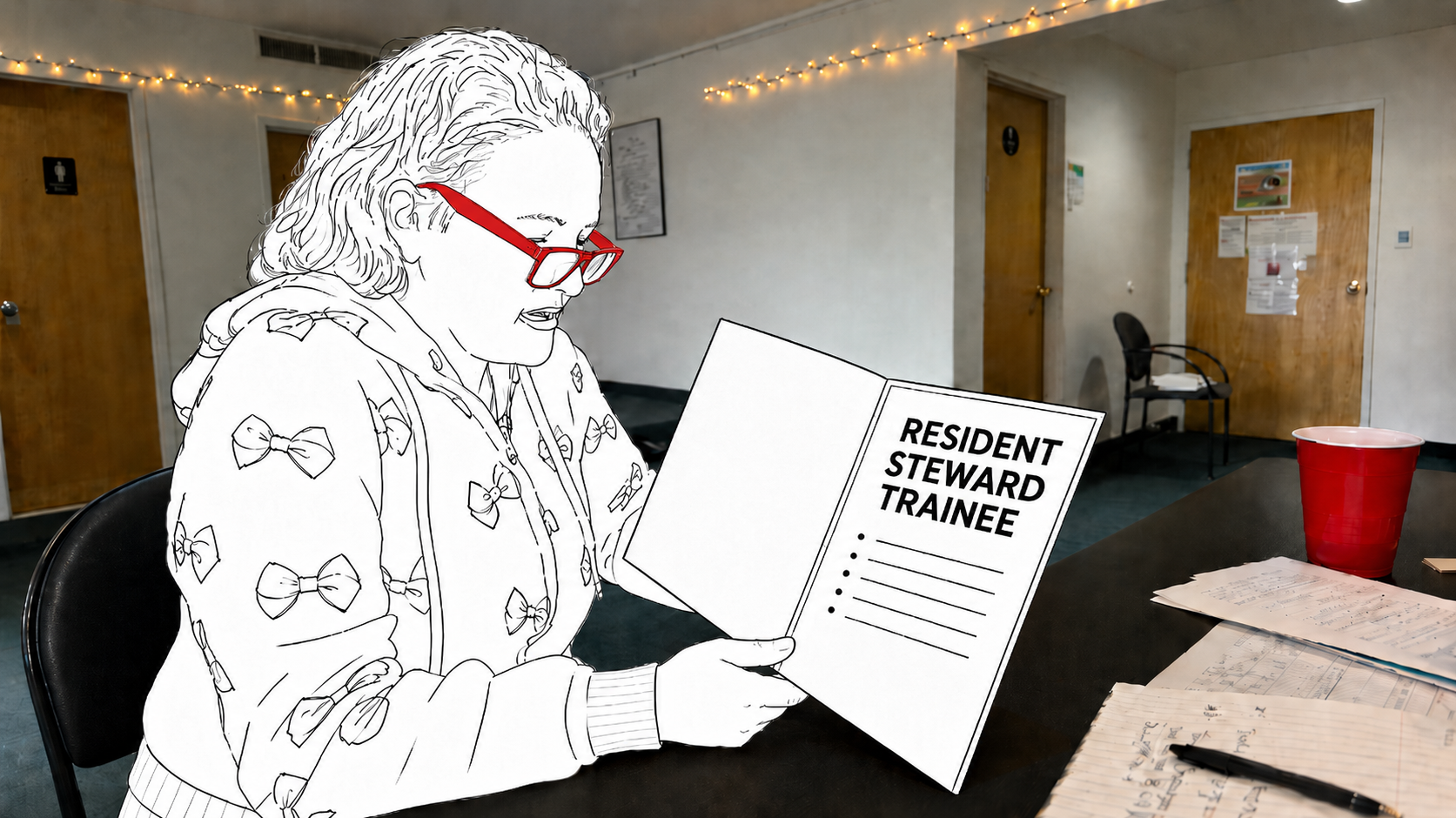
From November 2025 through January 2026, Saint Francis Challenge—funded by the City of Santa Fe and working in collaboration with local shelter and supported-housing providers and residents—designed and tested a voluntary Resident Steward Program across four Santa Fe sites. In light of changing SNAP and Medicaid participation requirements, the pilot explored how residents stabilizing from homelessness could build and document qualifying participation hours while strengthening benefits retention, daily routines, co-living, and connection to training, volunteer, recovery, education, and workforce opportunities. Grounded in SFC’s B.E.S.T. Places framework of Belonging, Essential Needs, Shared Agreements, and Teamwork, the program also created meaningful ways for residents to contribute to the places where they live.
The research included interviews with operators of four shelter and housing sites, confidential surveys with 34 residents, input from people with lived experience, and direct implementation of the pilot. Fifteen of the 34 residents surveyed were identified as potentially affected by SNAP participation requirements, while none reported already completing 20 or more weekly hours of work, training, or volunteering. At the same time, 24 residents—71% of those surveyed—expressed interest in becoming Resident Steward Trainees. Residents identified income, transportation, social activities, technology access, jobs, and job training as leading needs, while offering a wide range of skills and interests, including peer support, wellness activities, crafts, cooking, gardening, pet support, and community events.

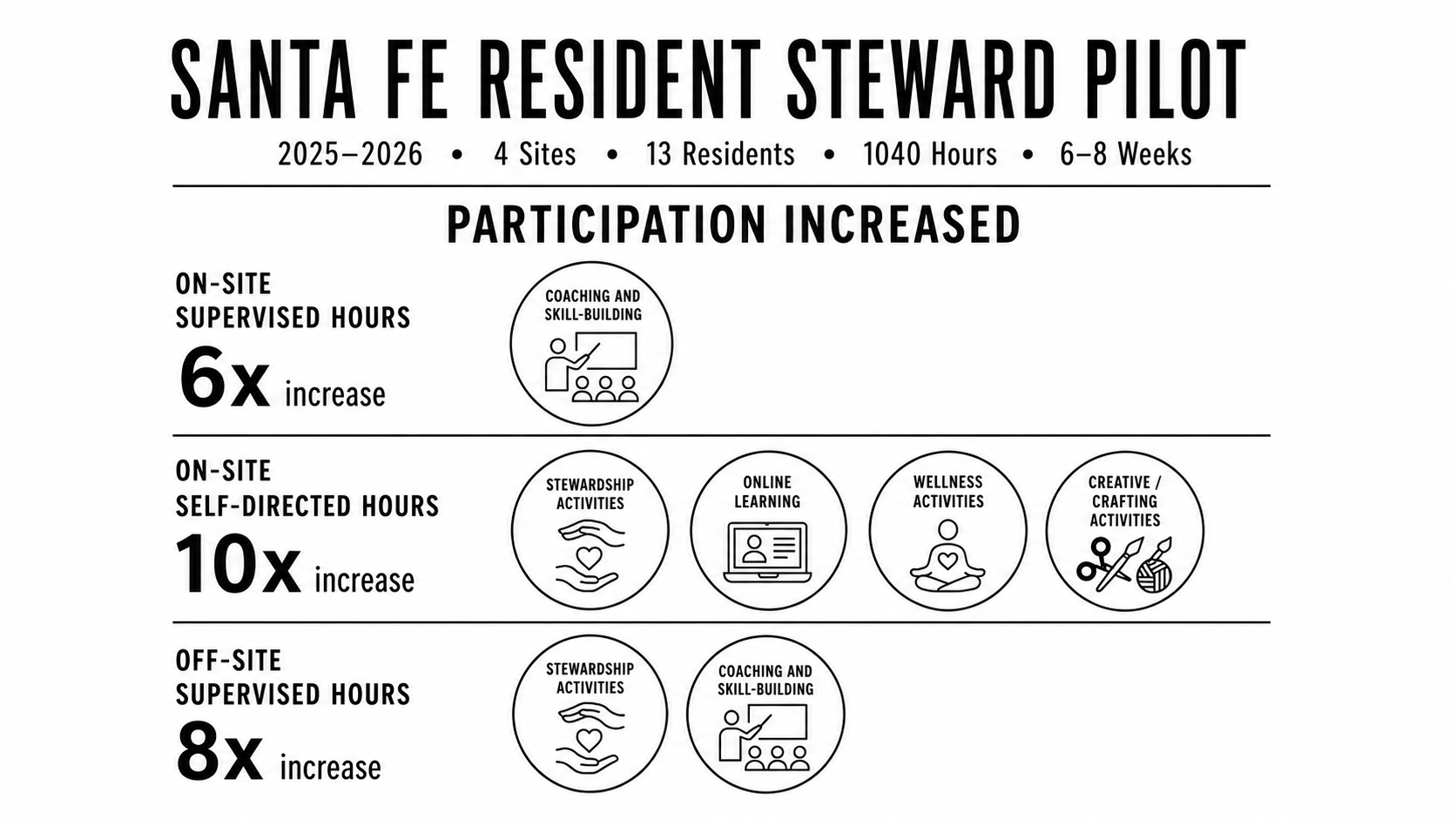
The pilot used a flexible “participation menu” rather than a single job-like pathway. Participants combined values-based training, online learning, coached and self-directed onsite activities, offsite volunteering, workforce and education navigation, and recovery participation. Of 17 residents invited to participate, 13 completed onboarding—and all 13 completed 80 hours over a six-to-eight-week period, for a combined 1,040 documented hours. Of those hours, 66% were completed through self-directed onsite activities, 19% through supervised onsite activities, and 15% through supervised offsite activities. Participants also completed online training, volunteered with community organizations, pursued employment and education, earned food-handler certificates, entered recovery treatment, and connected with SNAP Employment and Training services. One participant obtained full-time employment after more than a year of unsuccessful job searching.
The findings suggest that residents can complete substantial, documentable participation hours when programs provide structure, coaching, reminders, flexible scheduling, technology access, and multiple pathways matched to residents’ interests, abilities, and stage of stabilization. The report recommends continued investment in funded onsite participation infrastructure, benefits navigation, low-burden tracking and verification tools, values-based training, and stronger connections among housing providers, volunteer organizations, workforce agencies, and public-benefits systems.