Resident Steward Corps
From city-funded Resident Steward pilots to building a national service pathway
Saint Francis Challenge | 2026
Developing a Path from Homelessness to Stability
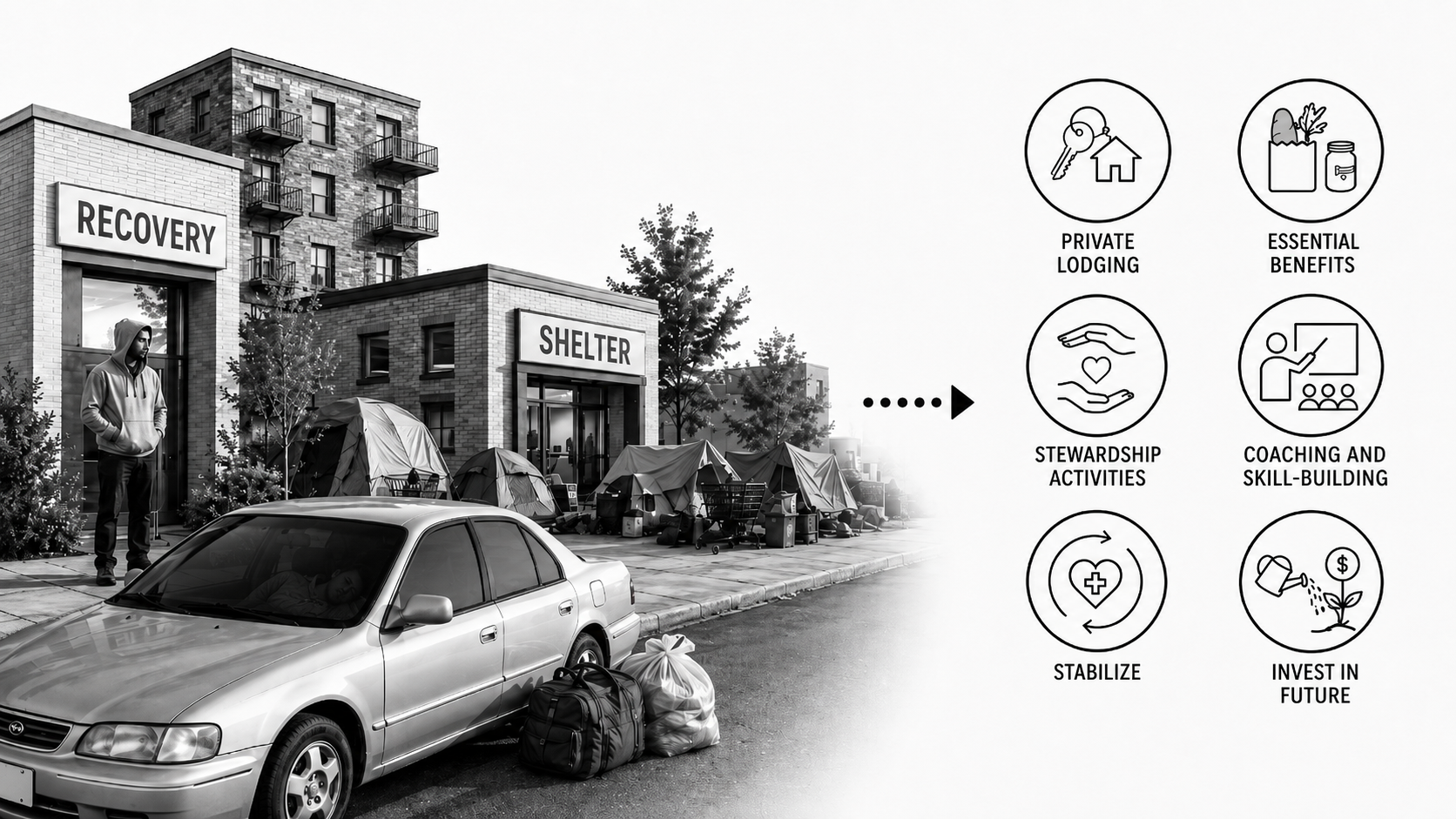
America needs more safe and structured places where people can exit street homelessness, recover from addiction, return from incarceration, and stabilize in community. Moving indoors is essential, but it is often only the beginning. People also need privacy and safety—including a private locking room where possible—and often need support with essential benefits, reliable routines, coaching, community connection, and time to rebuild the capacities required for lasting housing and economic stability and overall wellness.
At the same time, many adults stabilizing from homelessness and other crises have skills, interests, and a desire to contribute, even when they are not yet ready to obtain and successfully maintain conventional employment. Shelter and housing providers also need more capacity for resident engagement, co-living support, health and wellness activities, benefits retention, and community-building. SFC’s Resident Steward model connects those needs: creating structured opportunities for people to contribute where they live while building routine, purpose, skills, and a clearer path toward housing and economic stability. Rather than treating participation as hours to be completed for their own sake, the goal is to make those hours meaningful for the participant, the place where they are stabilizing, and the larger community. After multiple city-funded pilots, our ambition now is to build on what works and scale Resident Stewardship into a federally supported national service tradition: a Resident Steward Corps.
Saint Francis Challenge is not starting from zero. Since 2015, SFC has developed and tested Resident Steward approaches with people living in unsanctioned encampments, SOS cabin village pilots and proposals, a city-sanctioned tent community, and emergency and transitional shelter, transitional housing, and permanent supportive housing. Through this work, SFC has built and tested practical infrastructure for assessment and selection, onboarding, shared agreements, values-based training, personalized activity planning, coaching, community stewardship, workforce and volunteer linkages, and participation tracking. We know the model can provide coordination, engagement, structure, and tracking for residents living in shelter and supported housing. The opportunity now is to fund, digitize, evaluate, and scale that infrastructure into a Resident Steward Corps—a service pathway that helps people stabilize and contribute while strengthening the places and communities they call home.
Participation Requirements Need an On-Ramp: ASAP!
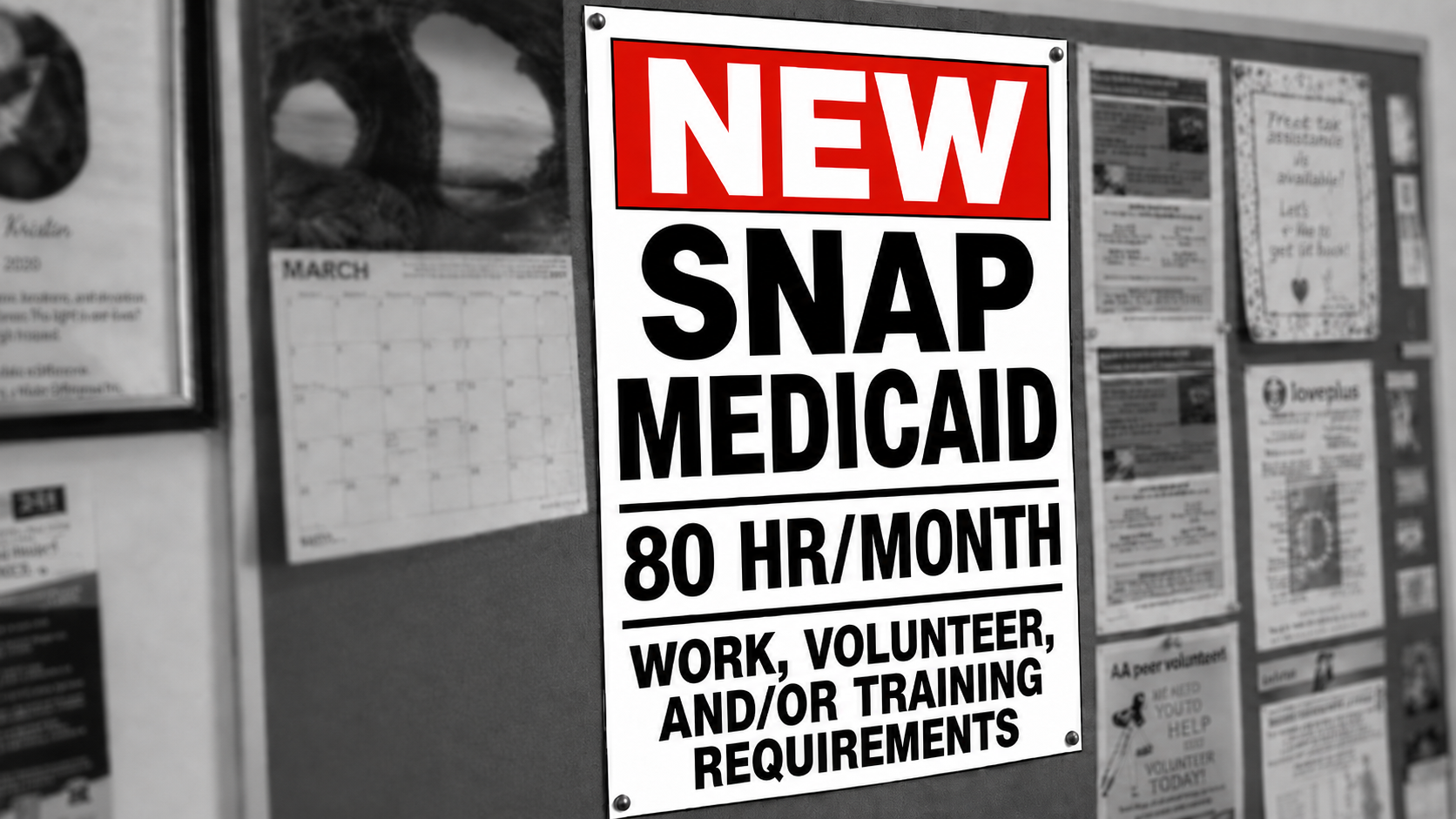
Many adults living on the streets or in shelter, rehab, and supported housing sites must now complete 80 hours per month of work or qualifying activities to retain SNAP benefits, while separate Medicaid participation requirements are coming in 2027. Yet many people in early stabilization still face substantial barriers to obtaining—and especially maintaining—conventional employment. Investing heavily in job placement before someone can reliably manage schedules, transportation, health, workplace relationships, and follow-through can waste scarce resources and set both the participant and the workforce system up for failure.Resident Steward Corps proposes a more practical approach by putting participation infrastructure where people are already living and stabilizing. Onsite assessment, selection, onboarding, training, coaching, benefits support, activity coordination, and participation tracking can help residents complete meaningful volunteer, training, wellness, stewardship, and workforce-development activities. Their hours can support benefits retention while also strengthening the shelter, housing site, recovery community, or neighborhood where they live. Instead of completing hours simply to satisfy a mandate, participants can build routine, purpose, pride, skills, community connection, and a demonstrated record of what they can reliably contribute.
This is a pragmatic model of interdependence. Public investment provides the safety, benefits, and support people need to stabilize; participants contribute time and effort that strengthen their own lives and the places they call home. For some, Resident Stewardship can be a step toward conventional employment. For others, it can be a sustainable and valued form of participation while they continue building housing, economic, and personal stability. With coordinated national, state, and local funding, the model can meet the federal goal of greater participation while producing better outcomes for participants, providers, communities, and the public systems investing in them.
For someone stabilizing after homelessness, addiction, prolonged unemployment, trauma, incarceration, or another major disruption, getting and keeping a conventional job may still be several steps away—even when that person is fully capable of contributing.
That is the gap Resident Stewardship is designed to fill.
Rather than asking only, “Can we place this person in a job?” we can first ask:
Can this person consistently participate? What can they sustain? What are they good at? What gets in the way? What support helps them succeed? And what should their next step be?
A Resident Steward pathway can provide a structured pre-workforce on-ramp through training, community service, volunteering, recovery-supportive activities, creative production, skill-building, and other approved forms of participation.
What We Have Already Learned
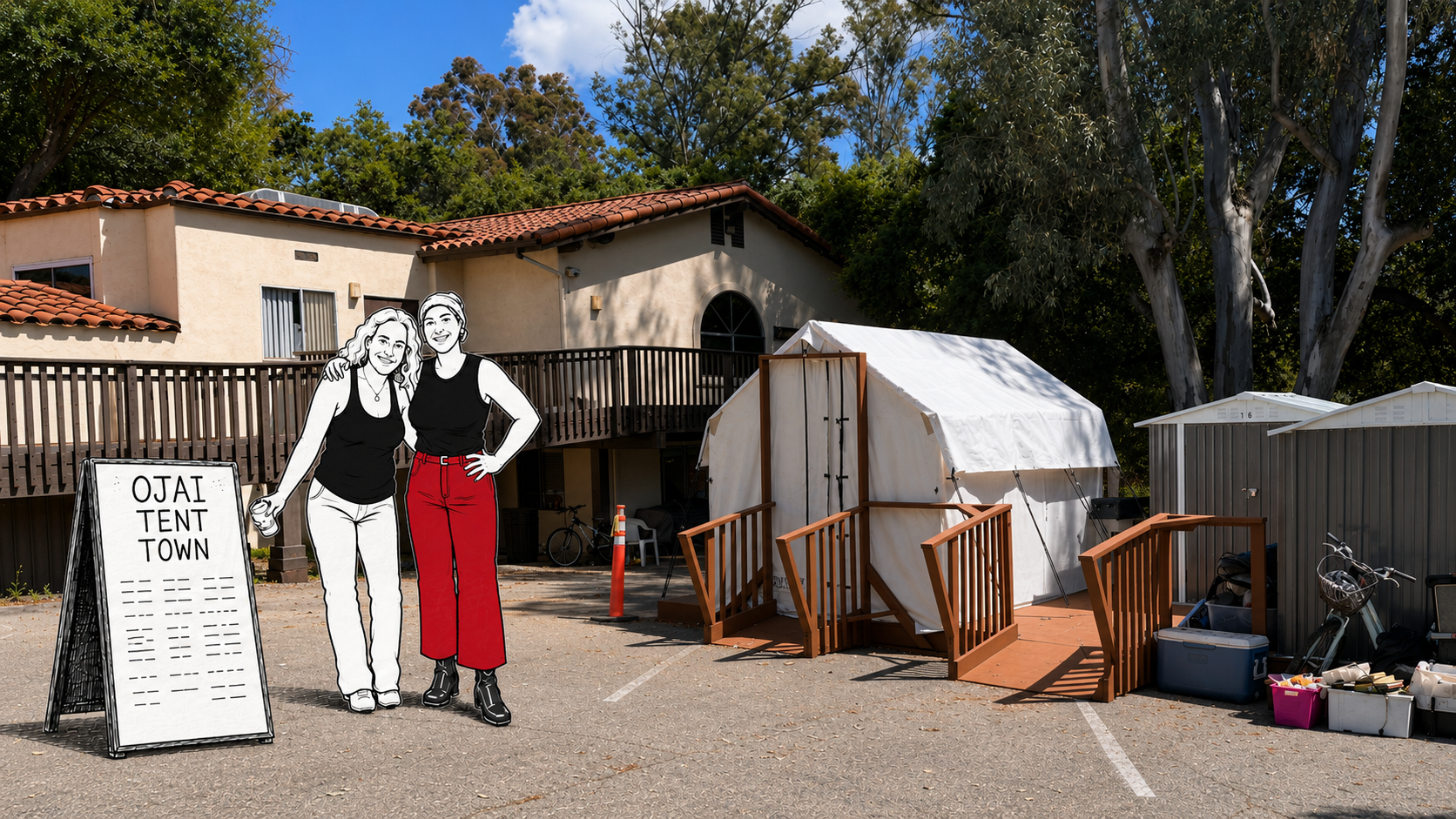
SFC has been developing Resident Steward approaches since the mid-2010s—beginning in large unsanctioned San Francisco encampments, continuing through the City-sanctioned Ojai Tent Town, and expanding into emergency shelter, transitional housing, and permanent supportive housing in Santa Fe. SFC has also studied and helped shape supported outdoor shelter and cabin-village approaches.
Across these settings, the core lesson has remained consistent: a safe physical place matters, but stability also depends on Belonging, Essential Needs, Shared Agreements, and Teamwork—what SFC calls B.E.S.T. Places.
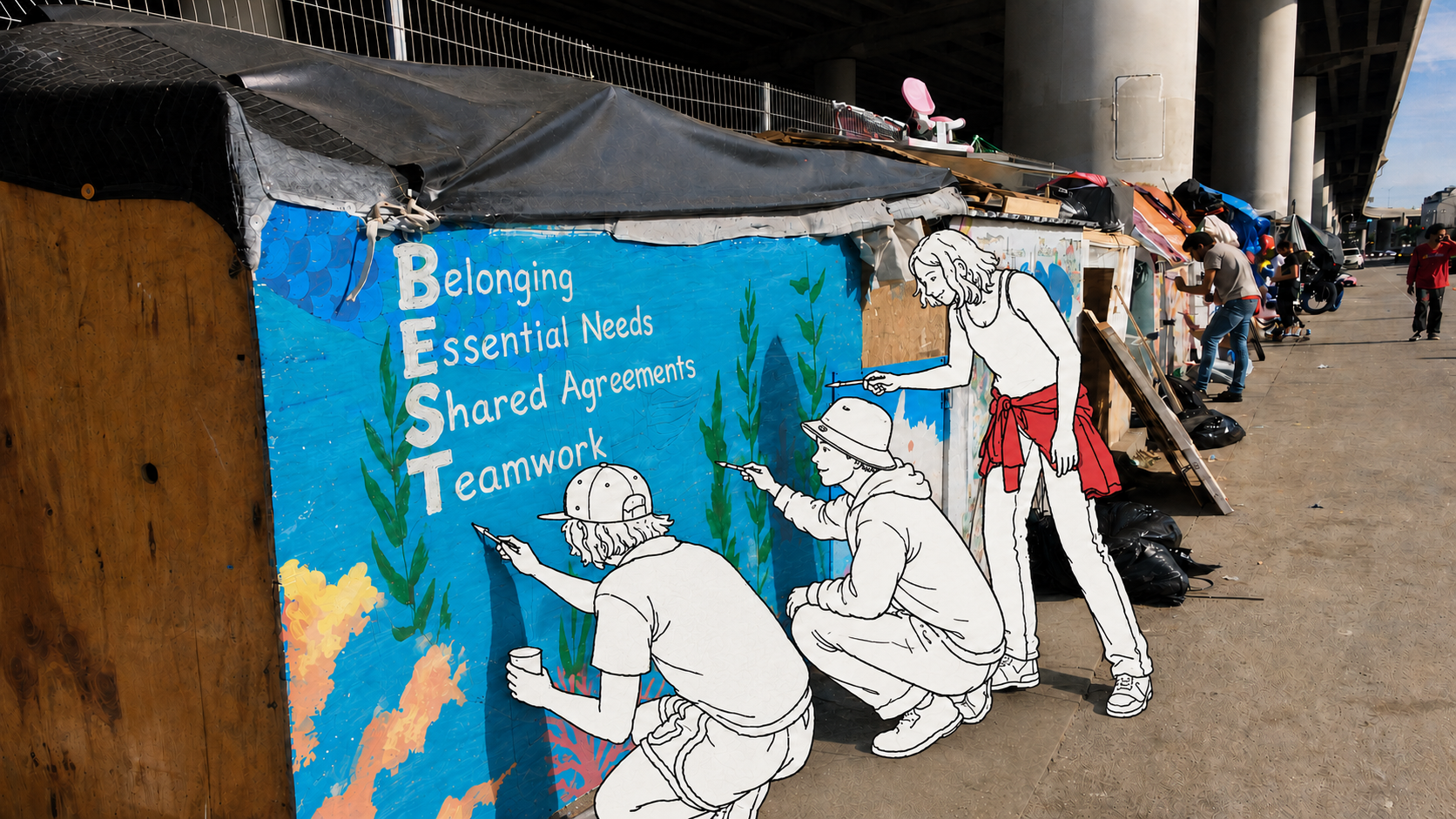
The 2025–2026 City of Santa Fe Resident Steward pilot provided the clearest test of the model. Across four shelter and supported-housing sites, SFC surveyed 34 residents. Twenty-four expressed interest, 17 were invited to participate, 13 completed onboarding—and all 13 completed 80 hours of structured activities, generating 1,040 documented hours over the pilot period. Participants combined onsite and online training, self-directed and supervised stewardship, volunteering, workforce and education exploration, recovery participation, and other individualized activities.
Just as important, the pilot tested the infrastructure surrounding those hours: assessment and selection, onboarding, personalized participation plans, values-based curriculum, coaching, reminders, multiple activity pathways, workforce and volunteer linkages, and methods for tracking and verifying participation.
The finding was not simply that people could complete 80 hours. It was that people who were not initially “hours ready” could succeed when the right structure and support were available.

The goal is not to make people contribute hours for the sake of hours. The goal is to make the hours count—for the individual, for their community, and for our country.
Structured participation can help someone retain benefits, rebuild routines, demonstrate reliability, identify strengths and barriers, contribute to the place where they live, and determine whether the right next step is employment, education, training, recovery, continued Resident Steward participation, or another form of support.
The pilot also showed that this work cannot simply be added to already-stretched providers. Assessment, scheduling, coaching, supervision, benefits navigation, technology access, documentation, and activity coordination require real infrastructure and funding.
Building Out the Infrastructure
Our current phase focuses on building three connected tools to help implement Resident Steward programming.
SFC is not merely designing an app and hoping that a program appears around it. The program came first—technology can now help it scale.
1. Participation Tracking, Benefits Documentation, and Workforce Assessment
During the Santa Fe pilot, SFC verified participation through attendance, online learning records, quizzes, reflections, texts, photographs, completed projects, volunteer verification, and other documentation.
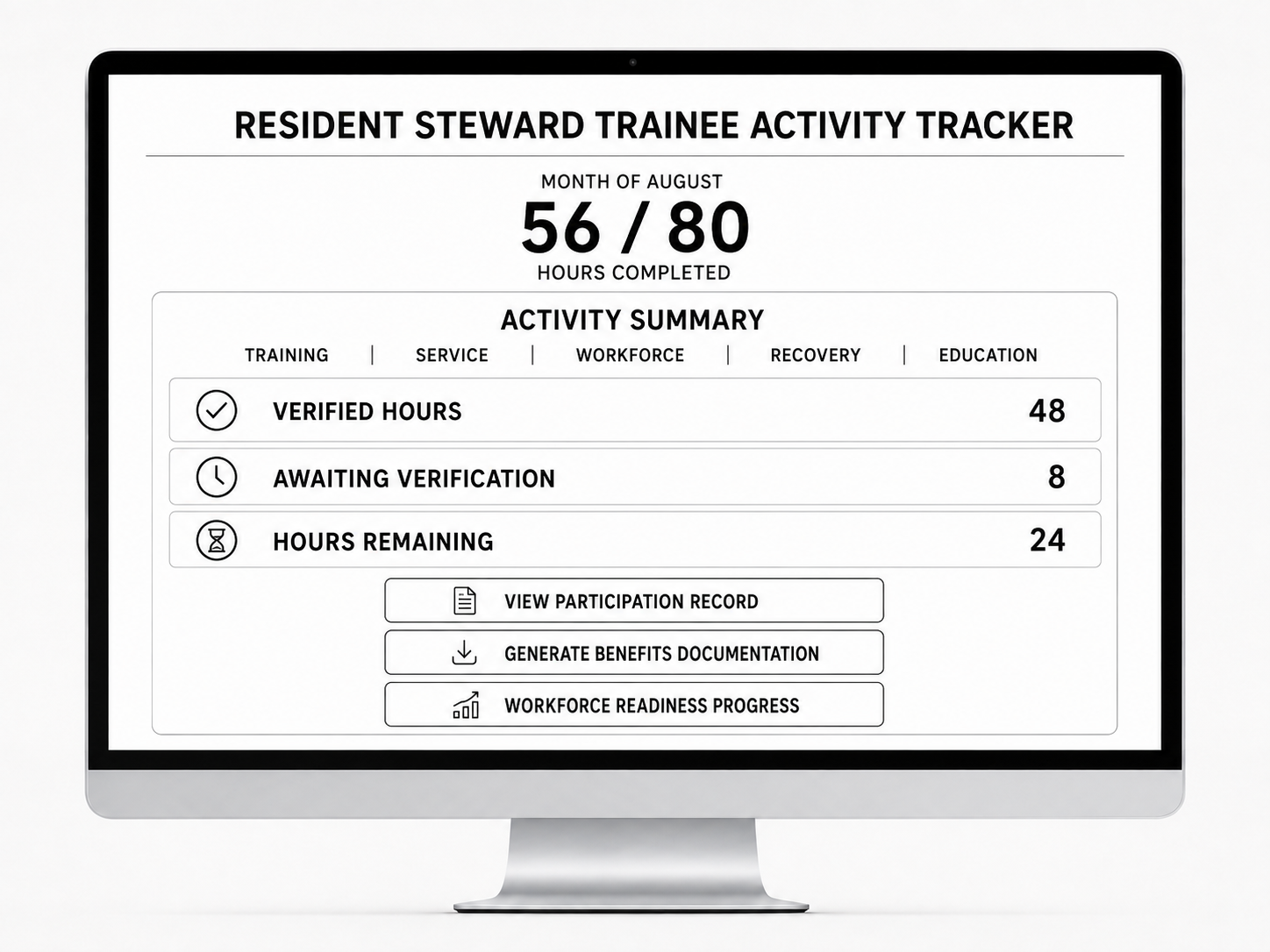
A digital Resident Steward Activity Tracker could turn those practices into one running record that shows:
Hours completed, verified, awaiting verification, and remaining;
Training, service, workforce, recovery, and education activities;
Certifications and completed projects;
Reliability, attendance, and demonstrated skills;
Supports or accommodations needed; and
Documentation that can be translated into benefits and workforce formats.
The same record can provide a practical assessment of workforce readiness based on what someone has actually demonstrated—not simply how they answer questions during an intake meeting.
The goal is to connect Resident Steward tracking with provider case-management, outreach, workforce, and benefits systems where possible, rather than creating another silo or asking staff and participants to enter the same information repeatedly.
The technology should reduce administrative burden, not add another layer of it.
2. Resident Steward Values interactive tool
Resident Stewardship is not only about accumulating hours. How people participate and live together is the foundation of the Resident Steward model.
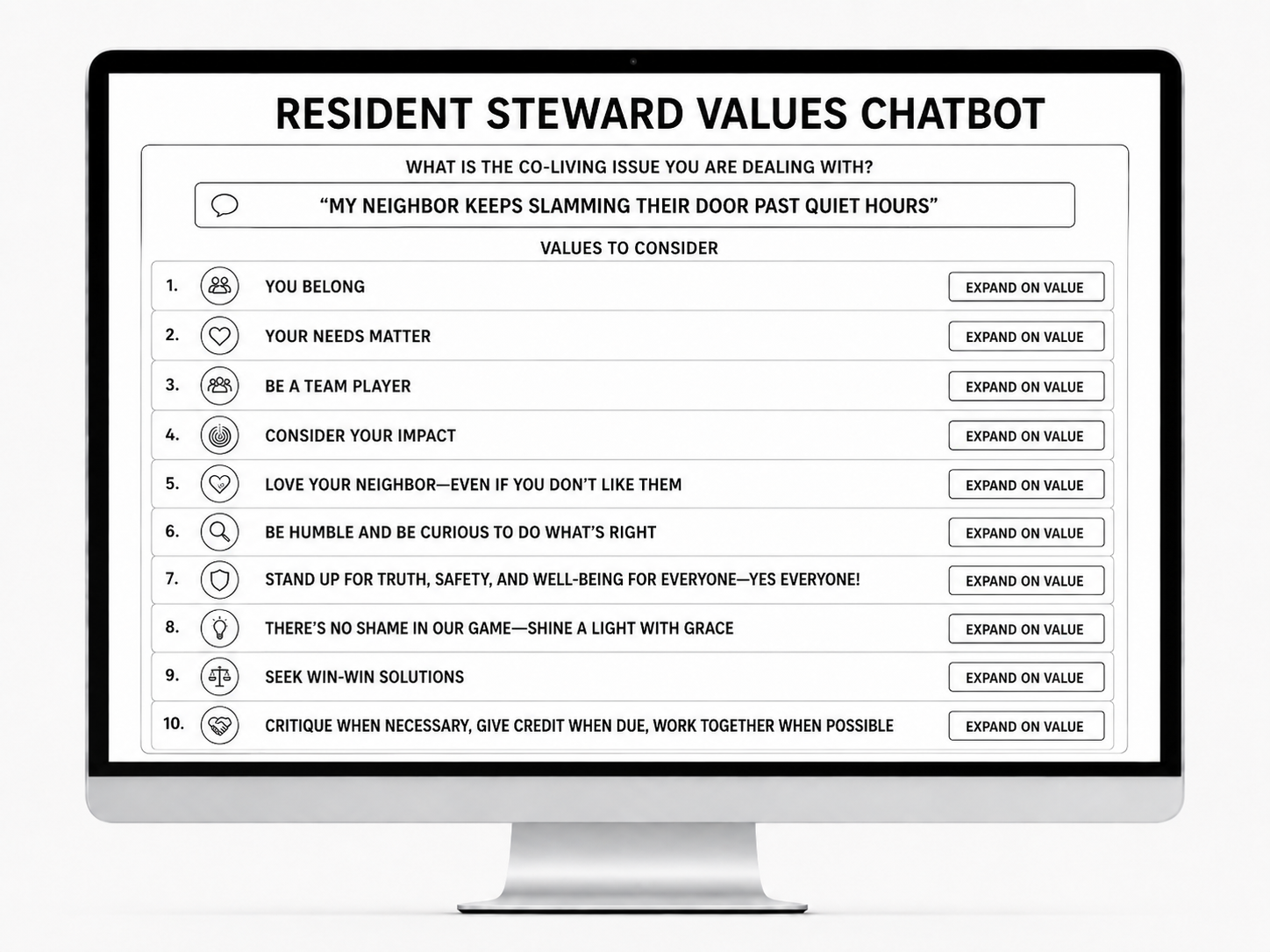
SFC's ten Resident Steward Values and B.E.S.T. Places framework have already been used in pilot curriculum and real co-living situations involving belonging, essential needs, boundaries, accountability, safety, conflict, repair, teamwork, and community impact.
The next phase is to make that tested curriculum easier to access in everyday life through an AI-supported Resident Steward Values tool.
A participant might bring a real situation to the tool:
My neighbor keeps doing this. I'm angry. How do I practice the Resident Steward Values without becoming a pushover?
The tool could help participants identify relevant values, think through boundaries and consequences, practice de-escalation, prepare for a difficult conversation, reflect on their own impact, and connect with related training.
This creates another layer of practical infrastructure for providers. Rather than expecting already-stretched case managers and shelter staff to personally coach every low-level co-living problem, residents can have access to values-based tools that reinforce the same language, expectations, and problem-solving framework being used across the Resident Steward program.
The tool would support—not replace—staff, behavioral-health care, emergency response, or case management.
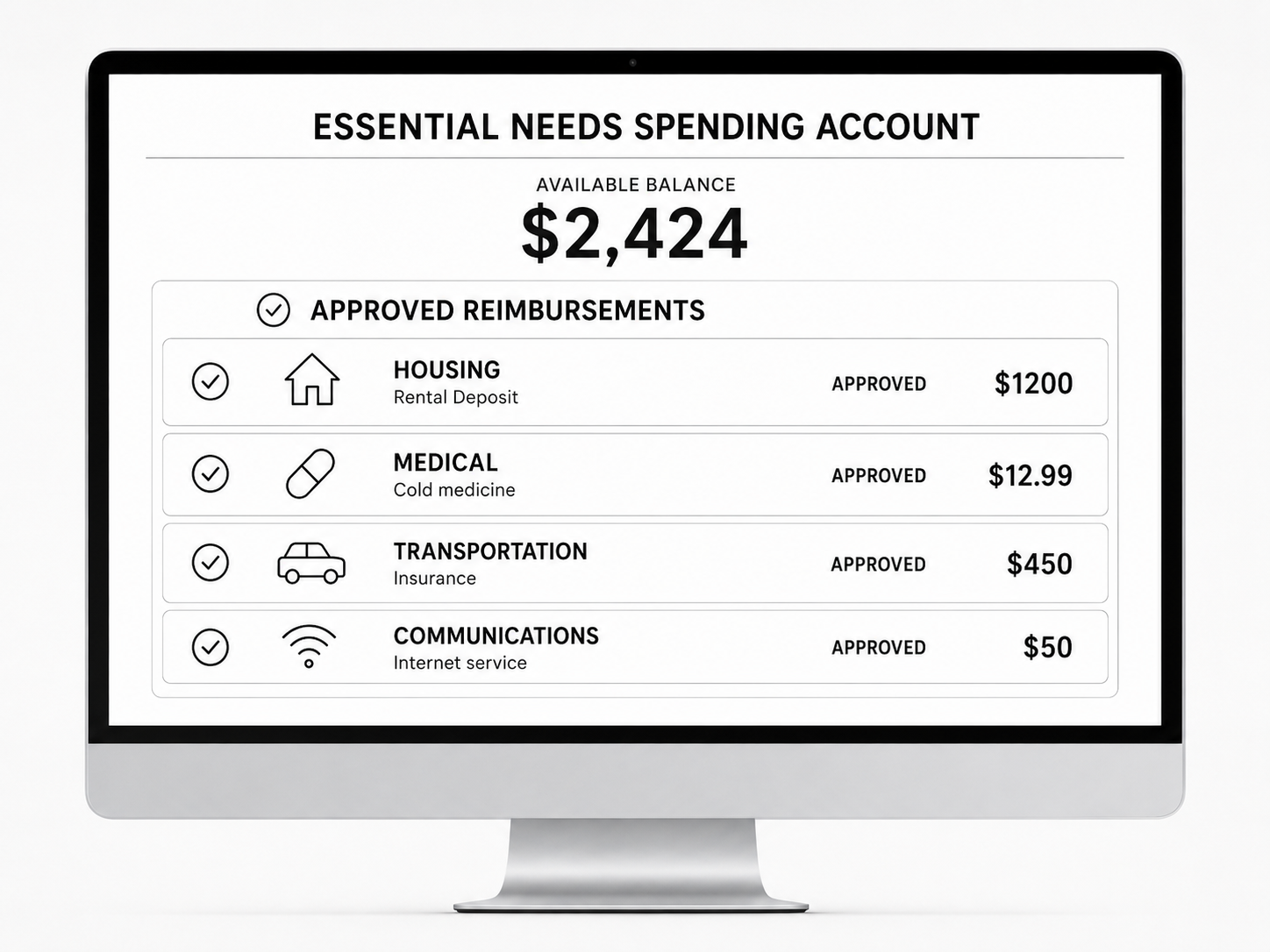
3. Essential Needs Spending Account (ENSA)
Participation is difficult to sustain when someone cannot keep a phone connected, afford transportation, buy appropriate clothing, access technology, take a class, cover an insurance payment, or save toward housing and other basic needs.
SFC’s earlier pilots have already tested providing structured essential-needs support alongside participation. The next phase is to develop that approach into an Essential Needs Spending Account, or ENSA—a restricted-use account, rather than unrestricted cash, with technology that makes support transparent, trackable, and easier to administer.
Depending on legal and program design, ENSA could support approved needs such as:
Housing and move-in costs;
Transportation;
Communications, including phone and internet service;
Healthcare-related expenses;
Food;
Clothing;
Education, training, and certifications;
Pet supplies; and
Other approved investments in stability.
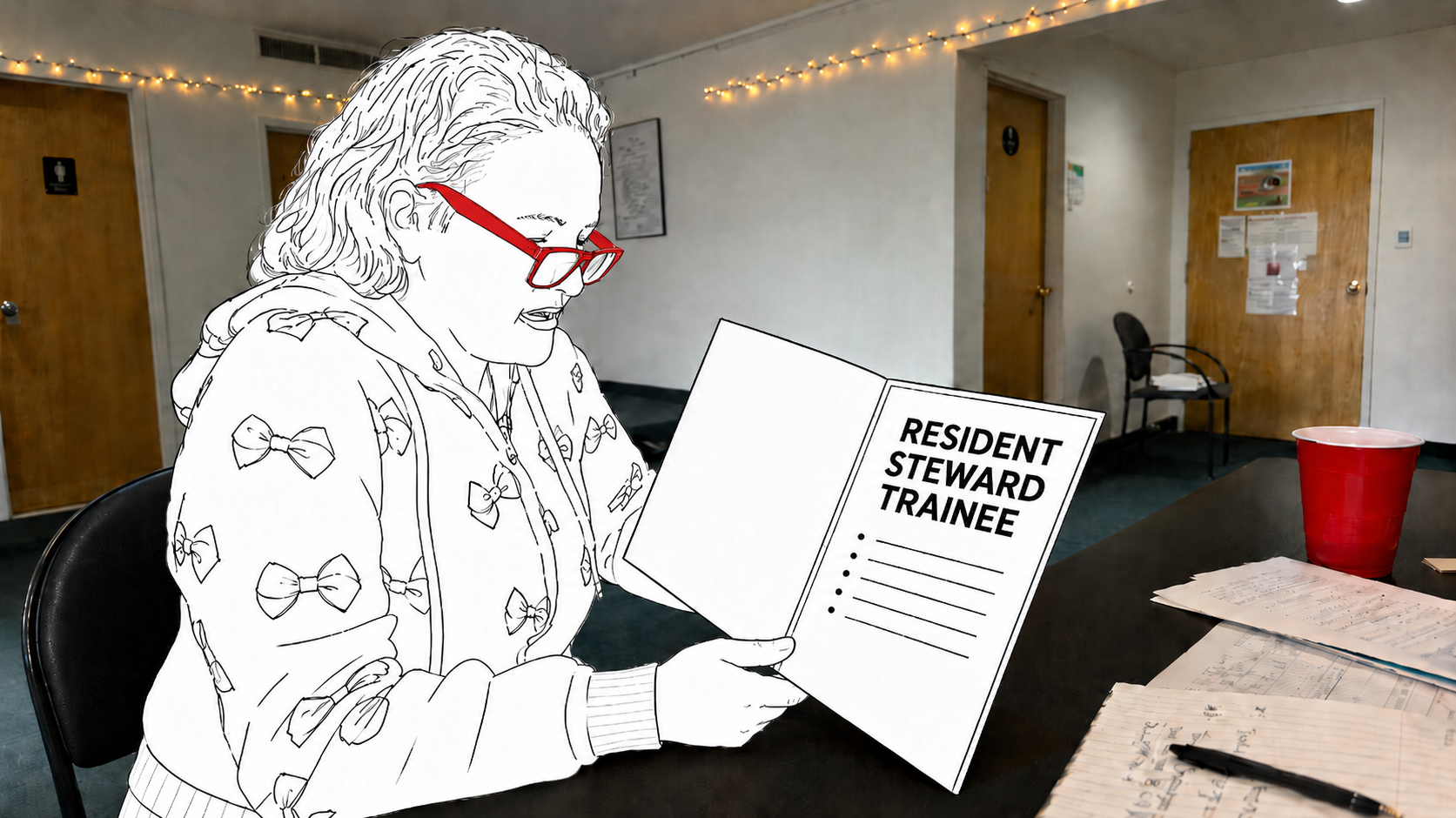
An important distinction is that the Resident Steward Trainee pathway is designed as voluntary service and training—not employment. Participants receive housing, benefits, training, coaching, and stabilization supports because those resources help people rebuild their lives and maintain housing, economic stability, and wellness. The baseline 80-hour monthly Resident Steward pathway is not intended to function as employment or as repayment for those supports.
For the next pilot, SFC is exploring a modest $250 monthly participation support for Resident Steward Trainees completing an approximately 80-hour monthly pathway, with that support credited to an ENSA-style account where legally appropriate. Rather than functioning as unrestricted cash, those funds would be available for approved essential needs that help participants remain stable and continue participating.
The longer-term Resident Steward Corps could also create a separate, optional additional-service pathway for participants who want and are able to take on more stewardship responsibilities. Participants could complete up to approximately 20 additional hours per week, with the value of those hours calculated at the applicable local minimum or living wage and credited directly to the participant’s ENSA rather than paid as ordinary unrestricted cash compensation, subject to the legal and policy structure developed for the program.
This creates two distinct lanes:
Resident Steward Trainee pathway: Approximately 80 hours per month of voluntary service, training, wellness, workforce preparation, and other approved participation. The Trainee pathway is not employment. Participants may receive modest monthly ENSA support while stabilizing, retaining benefits where eligible, building skills, and contributing to the places where they live.
Optional additional-service pathway: Participants who want and can sustain greater responsibility may complete up to approximately 20 additional hours per week. The economic value of those hours would be calculated at the applicable minimum or living wage and accrue in the participant’s ENSA, helping build resources for housing, transportation, food, healthcare, communications, education, clothing, and other approved essential needs.
The proposed model is not 20 hours of volunteer participation followed by 20 hours of ordinary take-home employment. The additional service hours are designed to build economic value inside the participant’s Essential Needs Spending Account and strengthen longer-term stability.
Not everyone needs to move into the additional-service pathway. A reliable 20-hour-per-week Resident Steward Trainee can remain a valued contributor. Others may choose additional service hours, advance into Resident Steward Facilitator or Coordinator roles, or move into other employment, education, or national-service opportunities.
As the Resident Steward Corps develops toward a state or federal program, SFC intends to explore the statutory, regulatory, tax, and public-benefit treatment needed for ENSA funds to function as a protected, restricted-use stabilization and asset-building benefit. Until that framework is formally established, the wage-and-hour, tax, benefits, and account treatment of participation support and additional ENSA contributions will require legal and policy review.
Reciprocity and Interdependence: Public Investment + Meaningful Contribution
Safe housing, SNAP, Medicaid, case management, behavioral-health care, transportation, workforce services, and program administration all cost money. Those investments are worthwhile because individual stability benefits the larger community.
The economic case is broader. A well-designed Resident Steward system may help:
Reduce benefit loss and administrative churn;
Avoid costly and poorly matched workforce placements;
Improve employment and housing retention;
Reduce duplicated provider and government work;
Strengthen shelter and housing environments; and
Make better use of existing public investments.
Those are outcomes the next pilots should measure rather than assume.
A Pathway, Not Just Meeting Requirements
Participating in a Resident Steward Corps as a Resident Steward Trainee should be a valued role in its own right—not simply a temporary status someone is expected to graduate out of.
For some participants, a flexible 20-hour-per-week structure may be the level they can reliably sustain while protecting their health, recovery, housing, and overall stability. That contribution still matters and should be recognized as meaningful service to the place and community where they live.
Others may choose to take on additional responsibilities through Resident Steward roles that offer up to an additional 20 hours per week of compensated service, paid at the applicable minimum wage and, where legally permissible, deposited into the participant’s Essential Needs Spending Account (ENSA). Those funds could help build economic stability and support approved needs such as transportation, housing, clothing, food, medical care, vocational training, and communications.
Other participants may advance into Resident Steward Facilitator or Coordinator roles, or use the skills, references, and demonstrated reliability they build through the program to move into more traditional employment opportunities.
The point is to create multiple legitimate pathways forward: a sustainable 20-hour contribution for those who need continued support, expanded paid service for those ready for more, leadership roles for participants with facilitation skills, and bridges into conventional employment where that is the right fit.
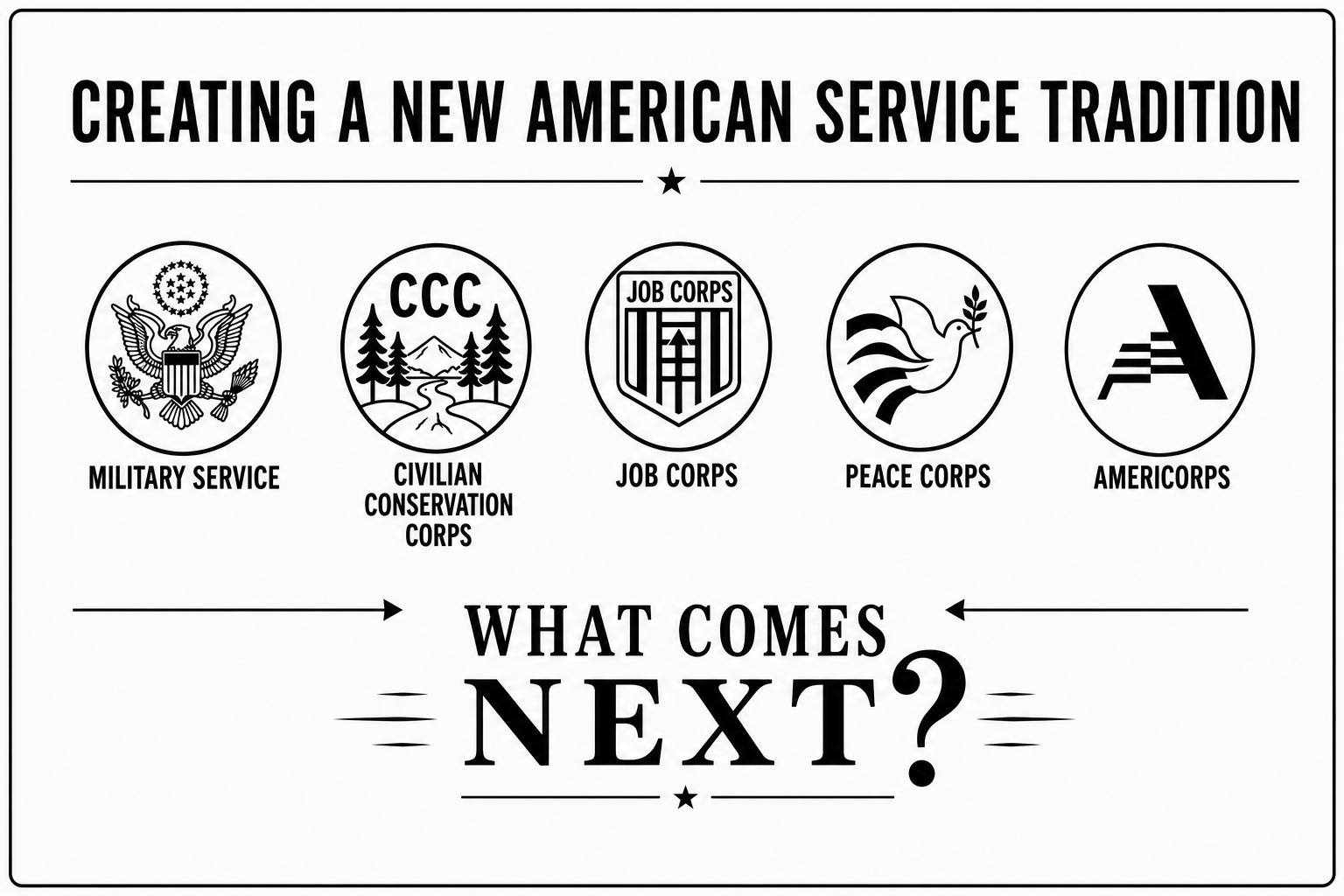
Connecting Resident Stewardship to America’s National Service Tradition
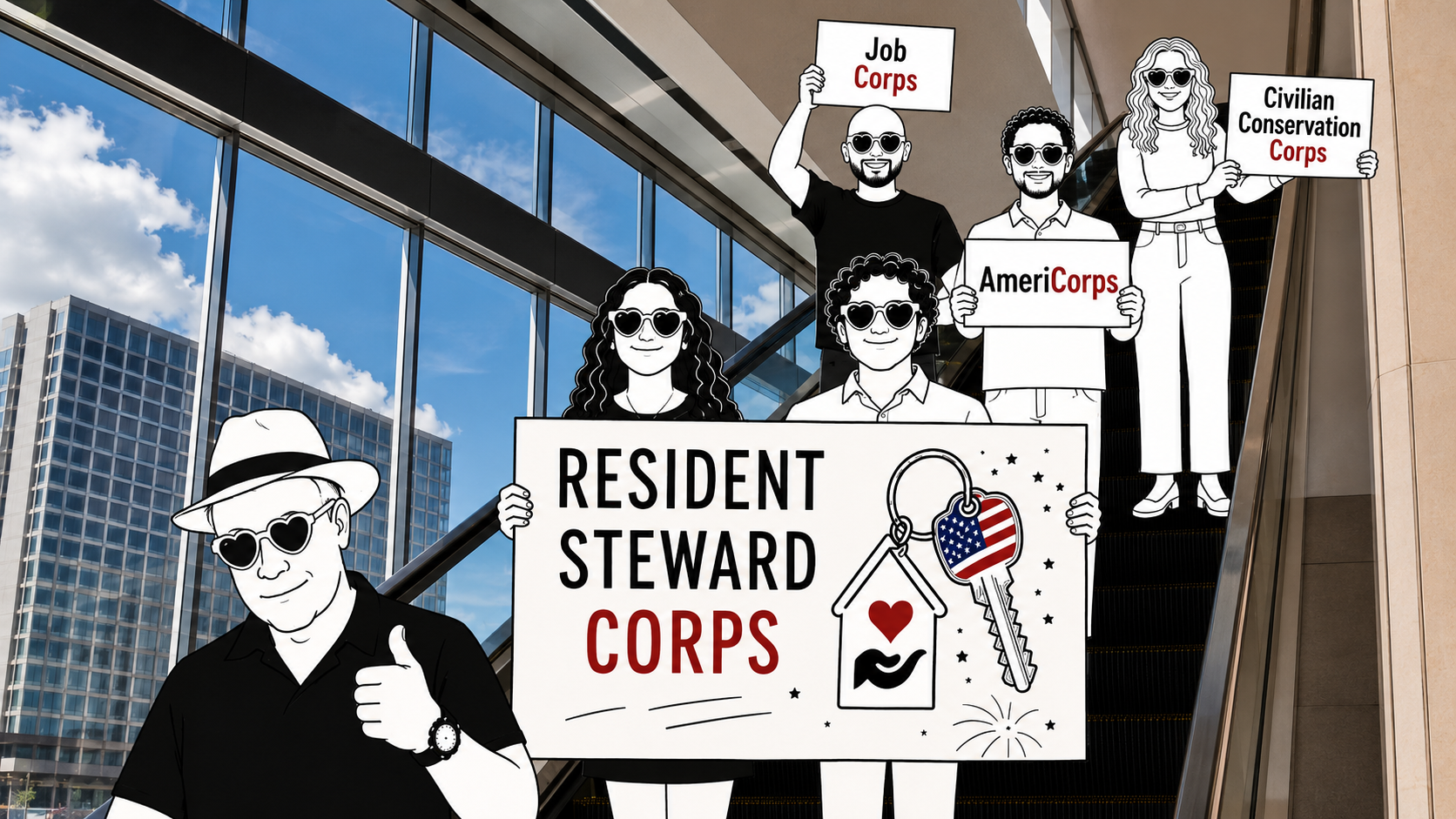
The United States has a long tradition of connecting public service, training, and opportunity—from the Civilian Conservation Corps and Job Corps to Peace Corps and AmeriCorps.
Resident Stewardship asks how that tradition can respond to another urgent need: Americans seeking safe places to stabilize and meaningful ways to contribute, and places and communities in need of stewardship.
The goal is not to create another separate workforce system. It is to connect housing, essential benefits, recovery, workforce development, community participation, and national service around a gap that none of those systems currently fills well on its own—and to create a straightforward pathway for non-exempt, able-bodied American adults to receive essential supports while making meaningful contributions to the places and communities where they live.
For some participants, Resident Stewardship may become a bridge to conventional employment or other forms of national service. For others, it can be a valued and sustainable way to contribute while continuing to receive the structure and support they need to maintain housing, economic stability, and wellness.
The Next Pilot: From Tested Model to Coordinated System
The next pilot should not simply repeat the question, “Can participants complete 80 hours?”
SFC has already shown that supported participants can.
The next pilot should test what it takes to make Resident Stewardship a coordinated, fundable, and replicable system:
a larger, multi-site Resident Steward cohort;
assessment, selection, onboarding, training, and coaching;
clear coordination with HCA, DWS, SNAP E&T, and providers regarding qualifying activities and exemptions;
digital participation tracking linked to benefits and workforce documentation;
the Resident Steward Values tool;
an ENSA prototype and legally appropriate participation support;
Facilitator and Coordinator staffing and advancement pathways; and
evaluation of benefits retention, workforce readiness, employment retention, provider workload, site functioning, participant stability, and public costs.
The central questions are practical:
Can better tracking reduce administrative burden and benefit interruptions?
Can real participation data improve workforce decisions?
Can Resident Steward programming strengthen the places where people stabilize?
And how can federal, state, local, housing, healthcare, workforce, philanthropic, and national-service funding be coordinated to meet those needs—rather than creating another mandate without the means to fulfill it?
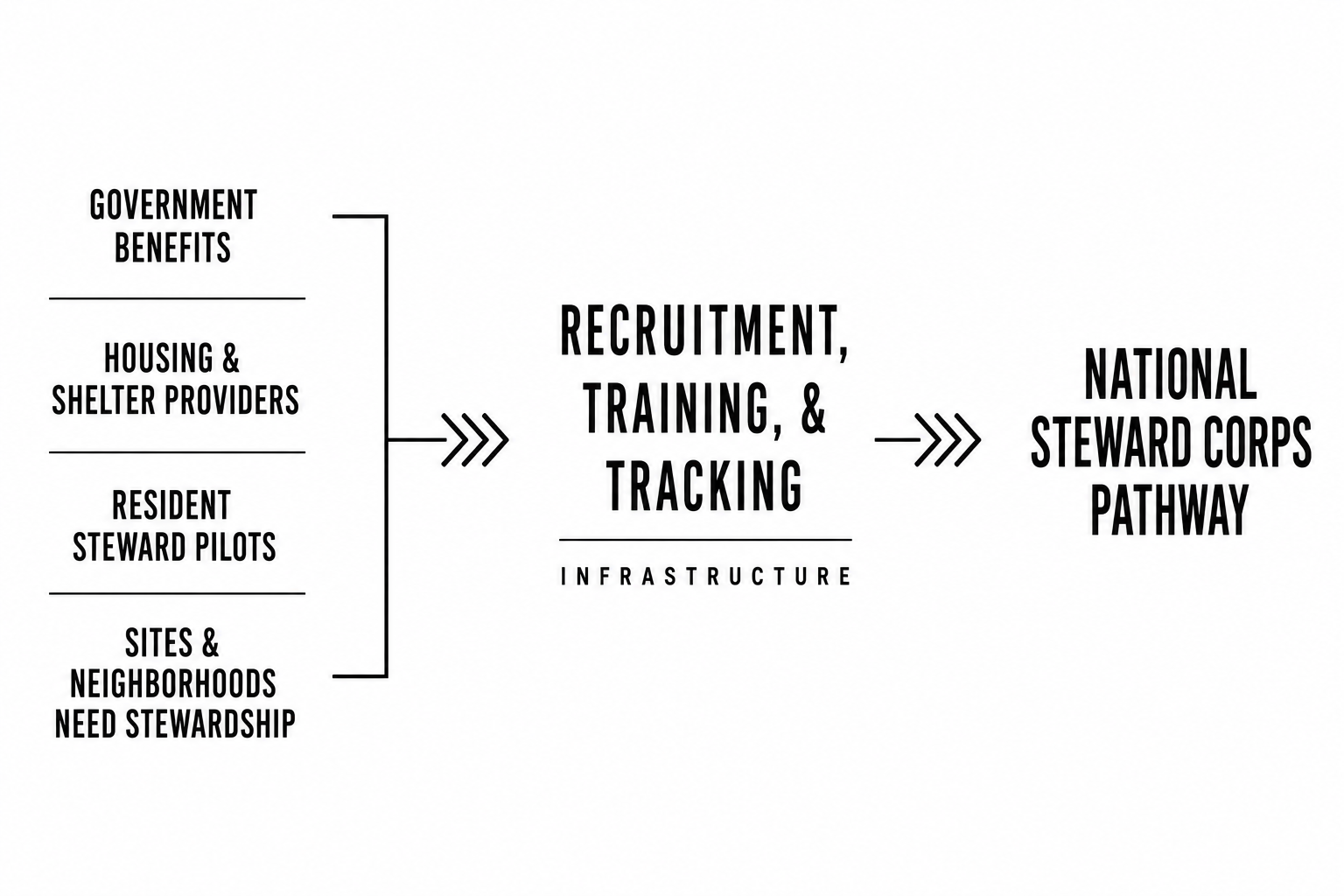
The Longer-Term Vision: A Resident Steward Corps
The longer-term vision is a national service pathway for people emerging from homelessness, addiction, incarceration, family crisis, and other major life transitions.
Participants would have safe places to stabilize, essential benefits, personalized participation plans, values-based training, meaningful ways to contribute, and records showing what they can reliably sustain. Some would remain valued Resident Steward Trainees. Others would advance into paid service, facilitation, coordination, education, national service, conventional employment, or leadership.
The organizations serving them would have the staffing, technology, activity infrastructure, and funding needed to support participation rather than merely document failure.
That is the Resident Steward Corps SFC is working to build: A system connecting Americans in need of safe places to belong, stabilize, and contribute with places in need of stewardship—so public investment supports stronger people, stronger places, and a stronger country.
Help Build the Next Phase
Saint Francis Challenge is seeking shelter and housing providers, government agencies, workforce and benefits partners, technology developers, researchers, funders, national-service organizations, and community partners to help build and evaluate the next Resident Steward pilots.